
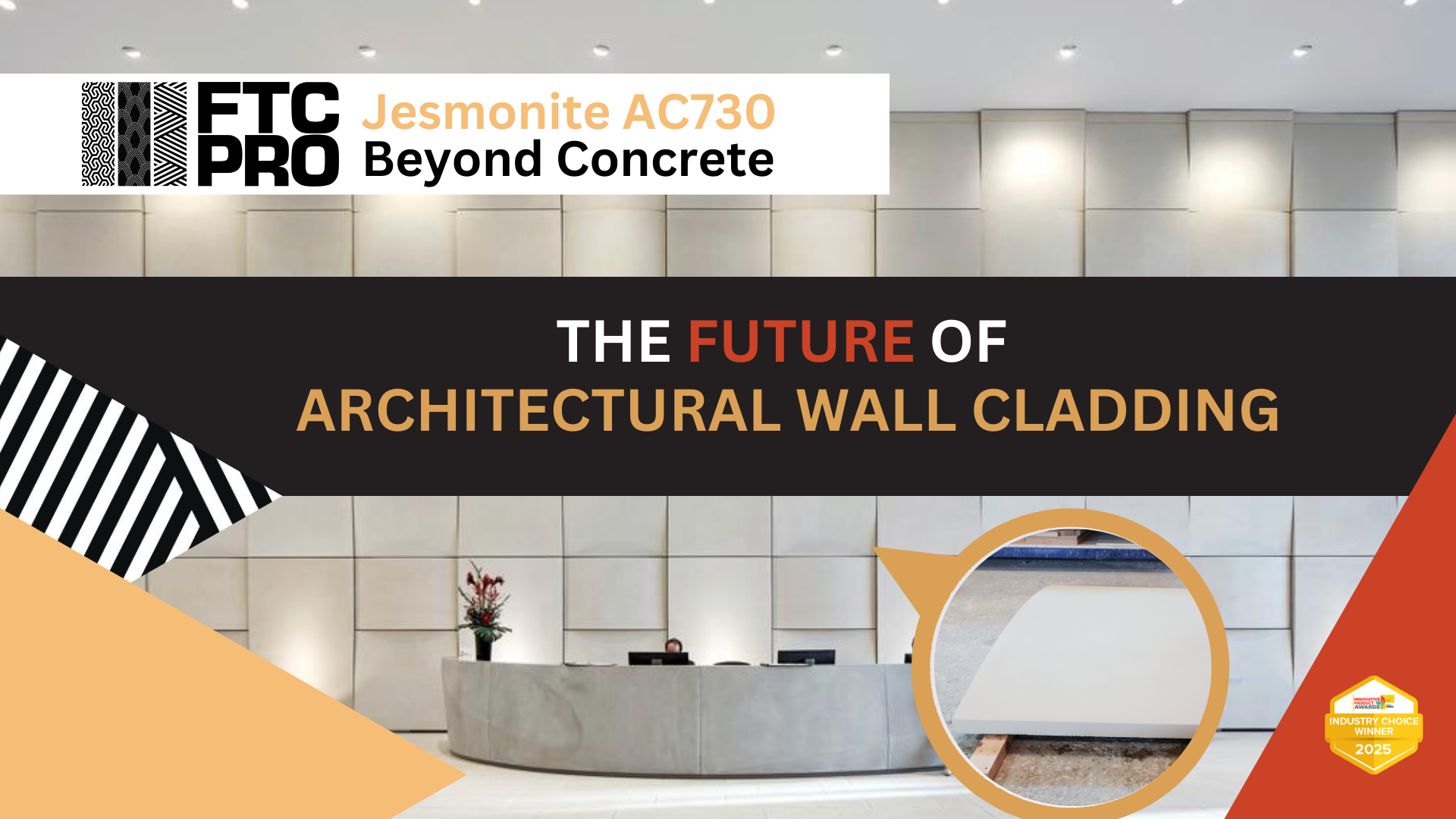
For decades, architects have faced the same frustrating trade-off: you can have the rich, tactile beauty of natural stone and concrete on a facade, or you can have a practical, lightweight cladding system — but rarely both. Traditional Glass Reinforced Concrete (GRC) and pre-cast concrete panels deliver undeniable aesthetic gravitas, yet they demand heavy structural support, complex anchor systems, and expensive crane lifts during installation. The result is inflated budgets, extended timelines, and structural compromises that limit design ambition.
AC730 Micro-Concrete changes that equation entirely. Developed by Jesmonite® — a UK-based innovator with over 40 years in advanced composite materials — AC730 is not a resin or a thin-film coating. It is a genuine cementitious composite that retains the tactile ruggedness and mineral character of stone, while stripping away the punishing weight and logistical complexity that have defined concrete cladding for generations. Distributed exclusively in the United States by FTC Pro, AC730 is now available to US architects, fabricators, and specifiers with stateside inventory.
What is AC730 Micro-Concrete?
At its core, AC730 is an acrylic-modified cementitious composite. In practical terms, that means it combines the familiar mineral base of Portland cement with an advanced acrylic polymer matrix, creating a material that behaves like concrete under load but cures faster, weighs significantly less, and resists the common failure modes — cracking, efflorescence, moisture ingress — that plague traditional systems.
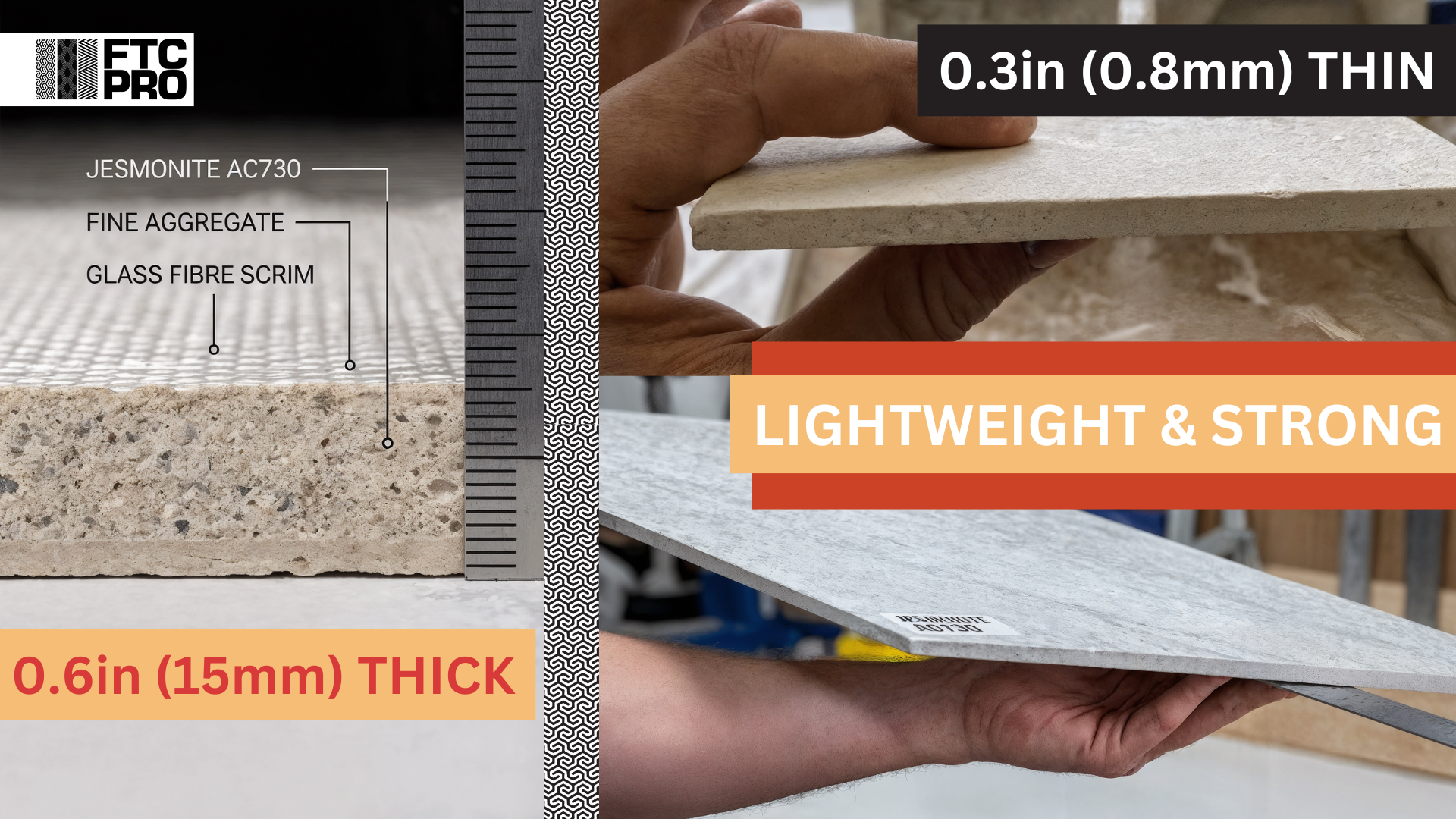
The “micro” in micro-concrete is more than marketing. It refers to the fine aggregate structure within the formulation. Unlike standard concrete, which relies on coarse aggregates to achieve bulk strength, AC730 uses carefully graded fine decorative aggregates and powder pigments. This micro-scale structure is what allows AC730 to capture astonishing surface detail from molds — replicating the grain of natural limestone, the texture of sandstone, or the veining of granite at a level of fidelity that traditional pre-cast simply cannot match.
It is worth noting that AC730 is specifically engineered for exterior applications. It is distinct from AC100 Eco-Resin, Jesmonite’s interior-grade system. AC730 is formulated to withstand UV exposure, freeze-thaw cycling, rain, and coastal humidity without degradation — making it a genuine architectural-grade cladding material, not a decorative finish applied over something else.
AC730 vs. Traditional Cladding: The Lightweight Revolution
The most immediately measurable advantage of AC730 over traditional pre-cast concrete is weight. AC730 panels can be cast as thin as 0.4–0.5 in (10–12mm) while maintaining full structural integrity. The dry density of AC730 is 115 lb/ft³ (1,850 kg/m³), per the official Jesmonite AC730 Technical Data Sheet. Standard normal-weight concrete has a density of approximately 150 lb/ft³ (2,400 kg/m³).
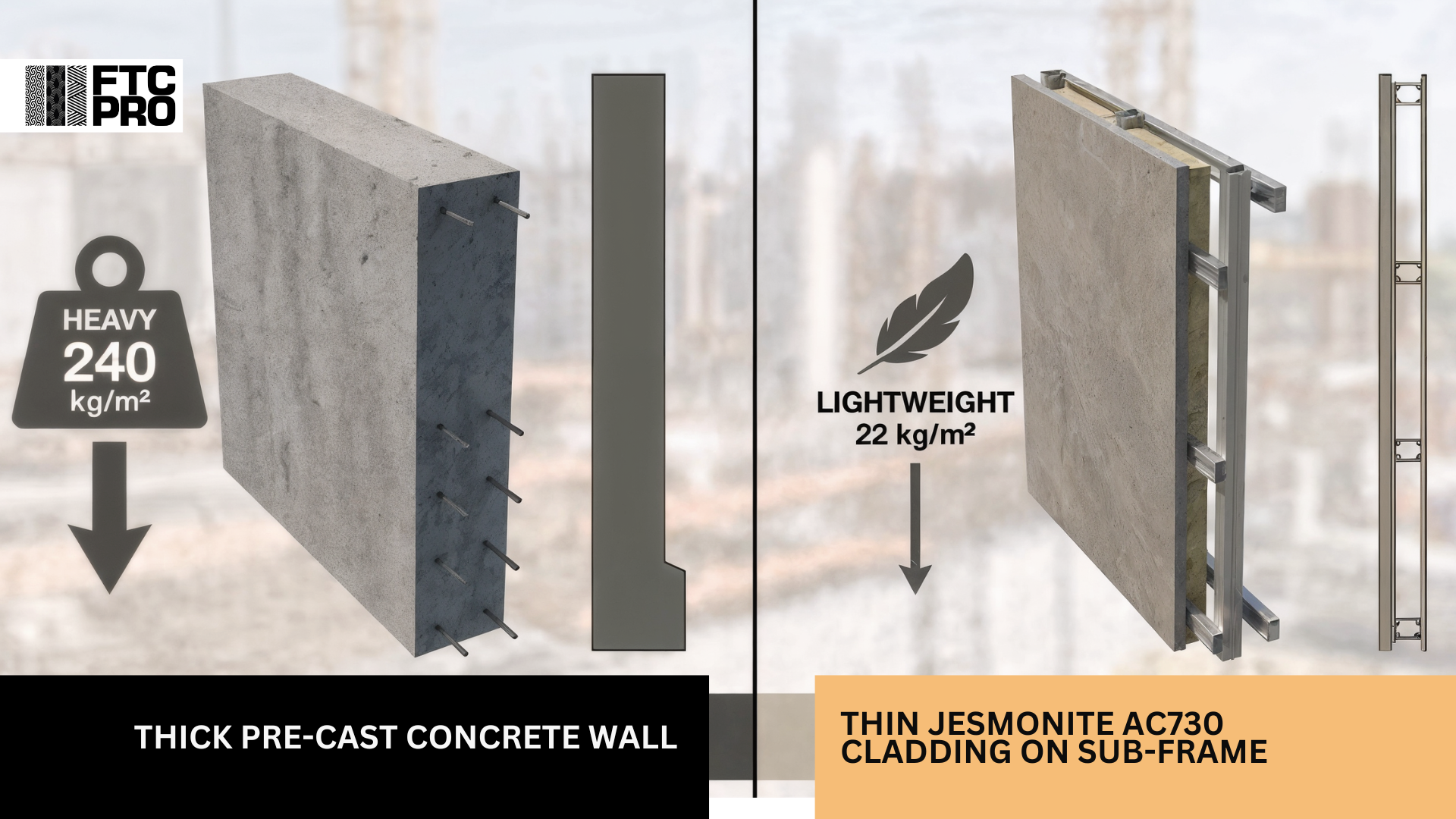
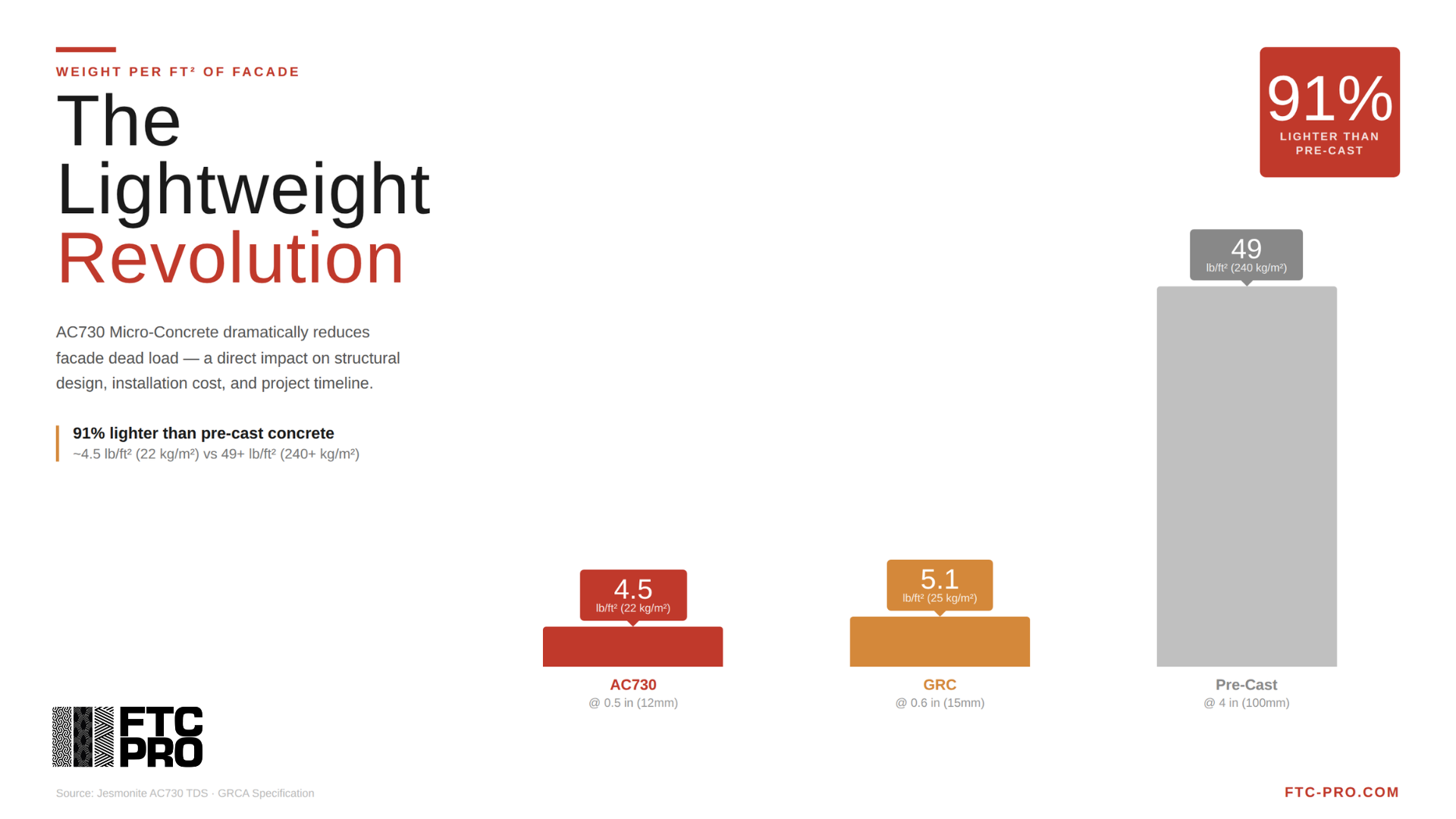
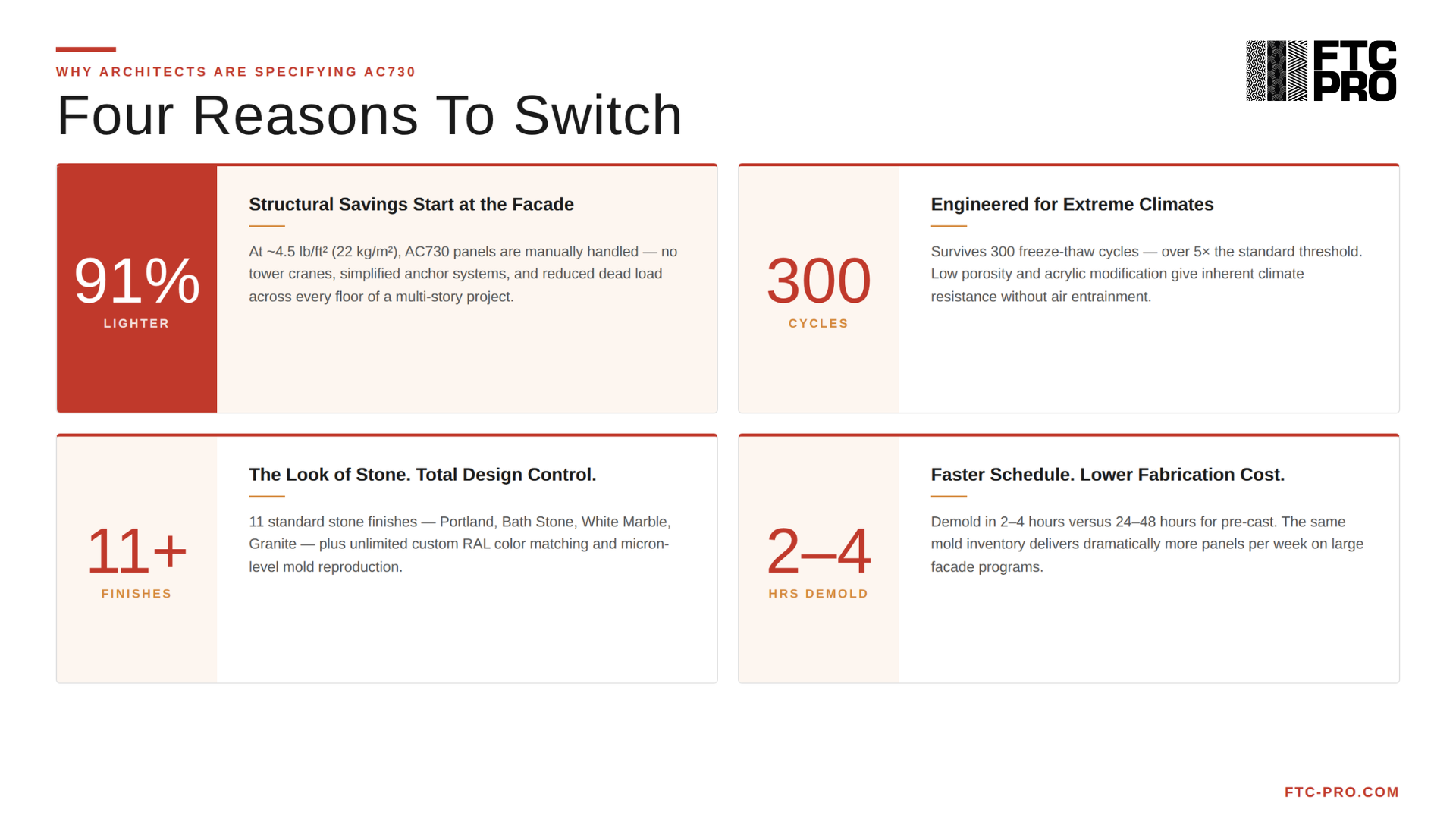
When you combine this density reduction with dramatically thinner panel profiles — 0.4–0.5 in (10–12mm) for AC730 versus 2–6 in (50–150mm) for typical pre-cast — the dead load reduction on the building structure is substantial. A 0.5 in (12mm) AC730 panel delivers approximately 4.5 lb/ft² (22 kg/m²) of facade weight, compared to roughly 49 lb/ft² (240 kg/m²) for 4 in (100mm) pre-cast concrete - a 91% weight reduction per square foot of facade.
A note on GRC comparison: It is important to distinguish between AC730’s weight advantage over pre-cast concrete and its advantage over GRC. GRC has a dry density of approximately 112 lb/ft³ (1,800 kg/m³) per the GRCA Specification — actually very close to AC730’s 1,850 kg/m³. The weight advantage of AC730 over GRC comes primarily from the ability to cast structurally adequate panels at thinner profiles, not from a large density difference. The massive weight saving is against conventional pre-cast concrete.
This matters for architects and structural engineers in several interconnected ways.
Reduced structural demand. Lighter cladding panels mean less dead load transferred to the primary structure. This can translate directly into reduced steel or concrete quantities in the frame — a significant cost saving, particularly on mid-rise and high-rise projects where facade weight compounds across dozens of floors.
Simplified installation. Panels light enough for manual handling eliminate the need for tower cranes or heavy mechanical lifts during facade installation. This reduces site logistics costs, improves safety, and accelerates the program. Simpler hanging systems and sub-frames replace the heavy-gauge anchor assemblies required for traditional pre-cast.
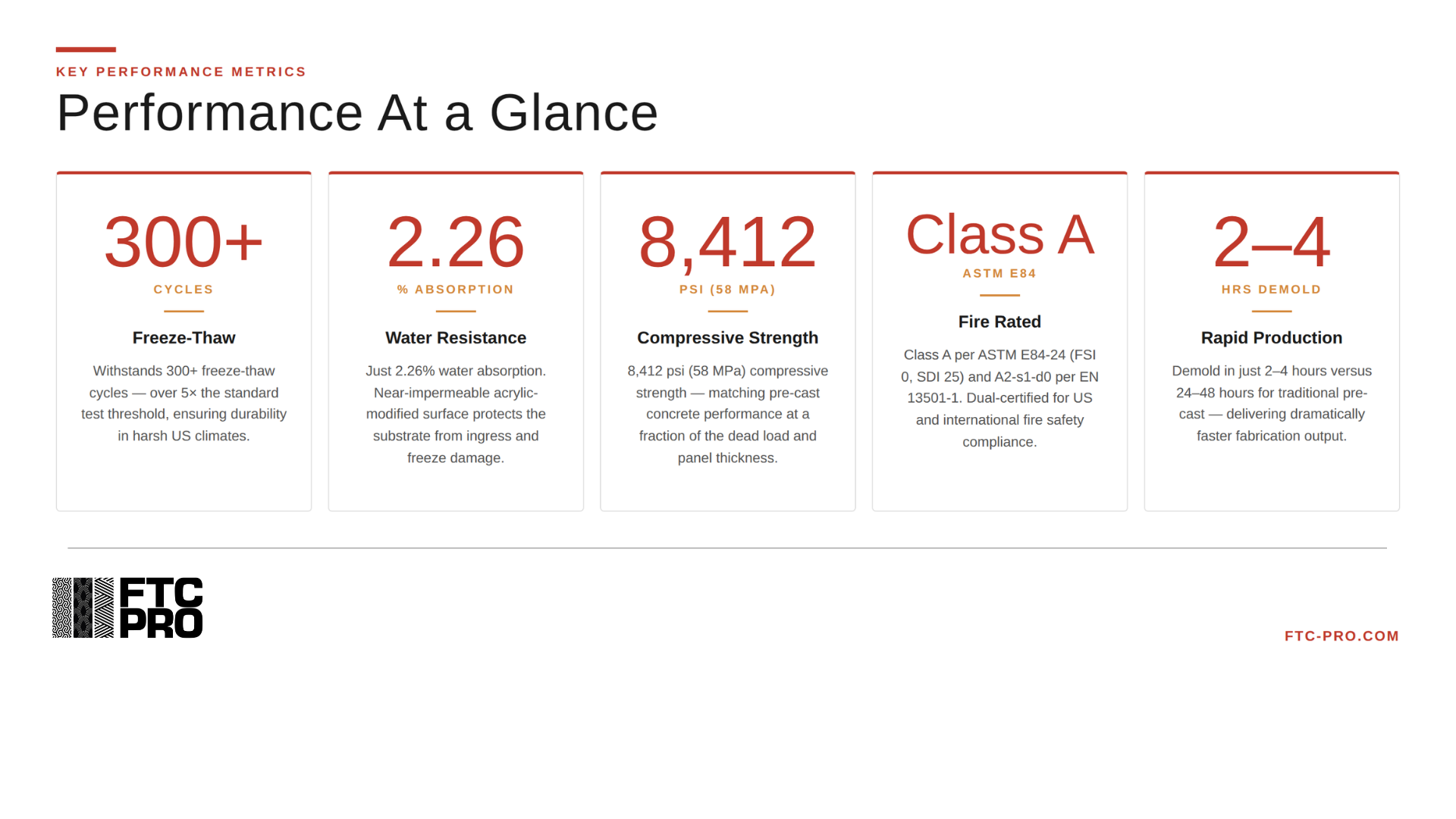
Faster program delivery. AC730 sets rapidly, with panels typically ready for demolding in as little as 2 to 4 hours depending on conditions (curing to full strength in 24-48 hours). Compare this to traditional concrete, which may require 24–48 hours of set time before any handling (curing to full strength within 28-days). This rapid turnaround for Jesmonite AC730 means fabricators can achieve significantly higher output from the same mold inventory — a critical efficiency gain on large-scale facade programs.
For a deeper look at how AC730 is reshaping fabrication workflows, read our introduction to Jesmonite AC730.
Aesthetic Versatility: The Look of Natural Stone
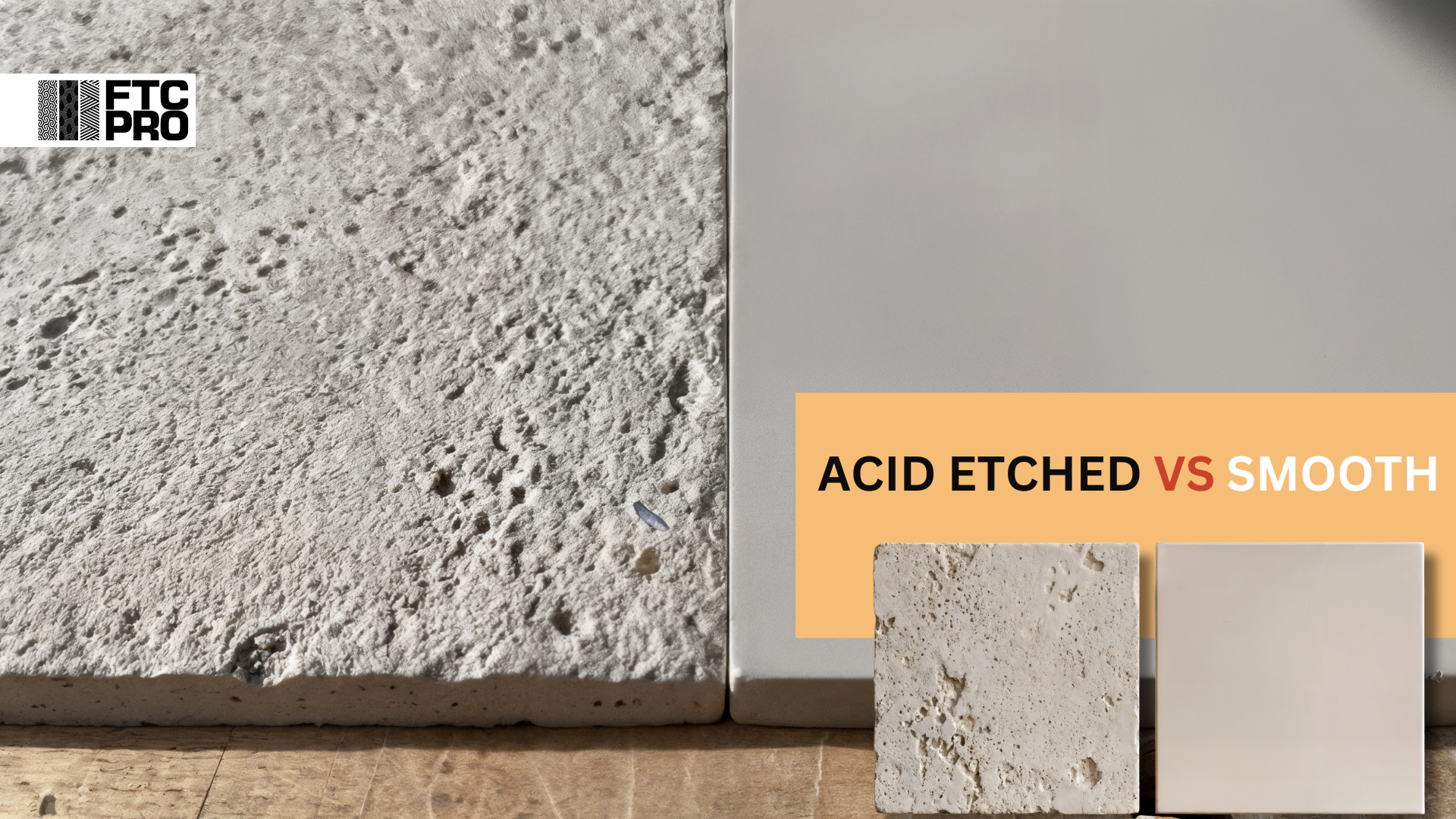
One of the most compelling reasons architects are specifying AC730 is its ability to replicate the appearance of natural stone with remarkable accuracy. After casting, panels are treated with an acid etch or proprietary surface cleaner, which reveals the decorative aggregate within the matrix. The result is a surface that is, to the eye and the touch, indistinguishable from quarried stone.
Jesmonite offers 11 standard stone finishes for AC730, including Natural Stone, Portland Stone, Bath Stone, Yellow Sandstone, White Marble, Silver Grey Granite, Old Terracotta, Cotswold Honey Stone, Brick Red, Charcoal Black, and Marigold. Each finish is carefully formulated with specific aggregate blends and pigments to replicate the tonal range and textural character of its natural counterpart.
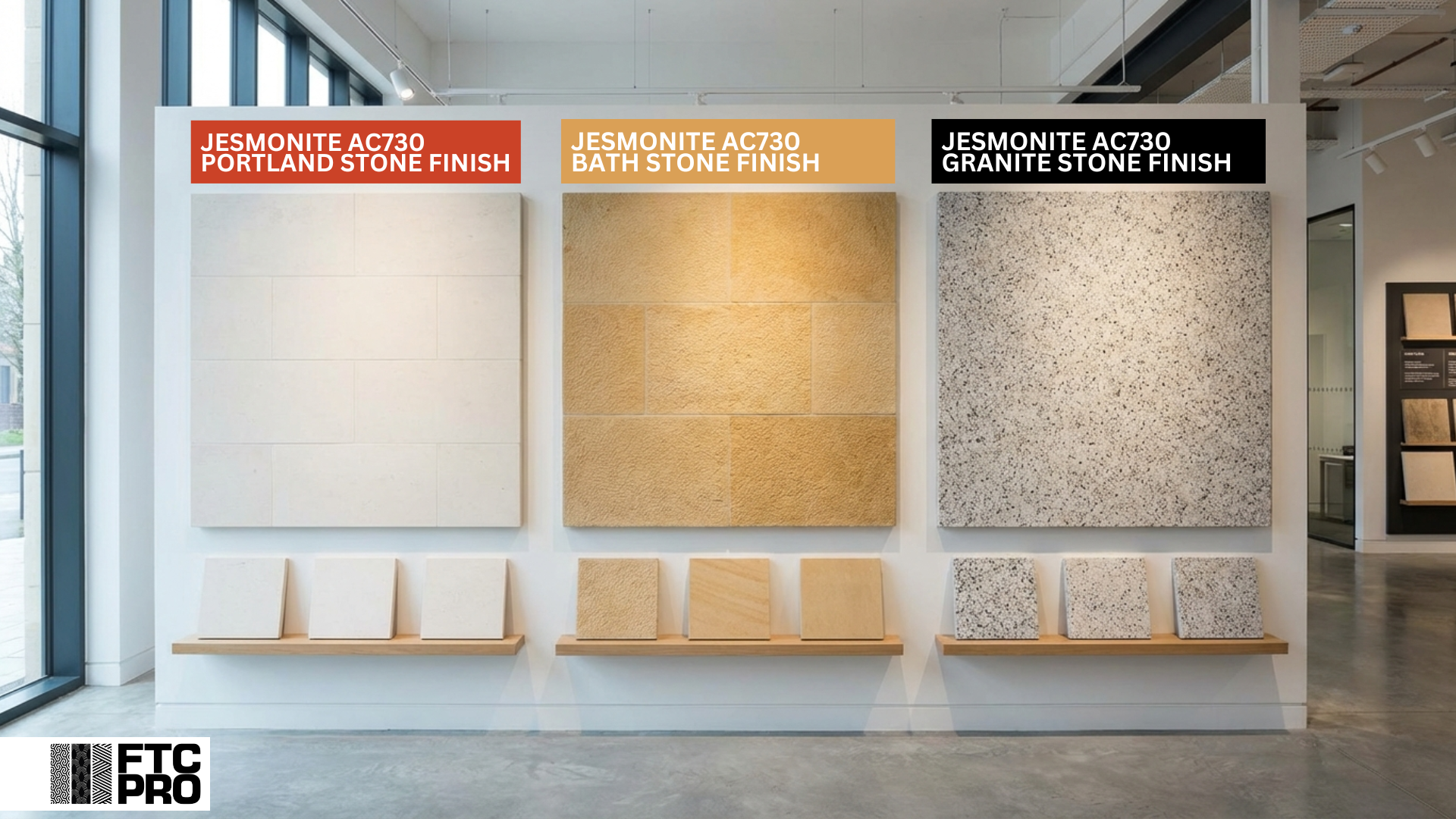
Beyond standard finishes, AC730 gives architects total creative control. Custom colour matching is available, allowing specifiers to match specific RAL references or bespoke stone blends. This means a facade can be designed to complement an adjacent heritage building’s original stonework, or it can push into entirely contemporary palettes that would be impossible or prohibitively expensive in natural stone.
The fine aggregate structure of AC730 also means it captures mold detail at a level traditional pre-cast cannot achieve. Intricate cornices, deep reveals, fluted pilasters, and textured relief panels are all within reach — produced from high-quality molds without the aggregate voids and surface defects common in standard concrete casting. For guidance on achieving optimal results, see our article on achieving perfection in casting with top-quality mold materials.
Durability and Performance in US Climates
Aesthetic appeal means nothing if a facade material cannot perform in the field. For U.S. architects, durability is assessed against a demanding set of environmental conditions that vary dramatically from the freeze-thaw cycles of Minnesota to the salt spray of coastal Florida. AC730 is engineered to meet these challenges head-on — and its performance is backed by independently verified test data.
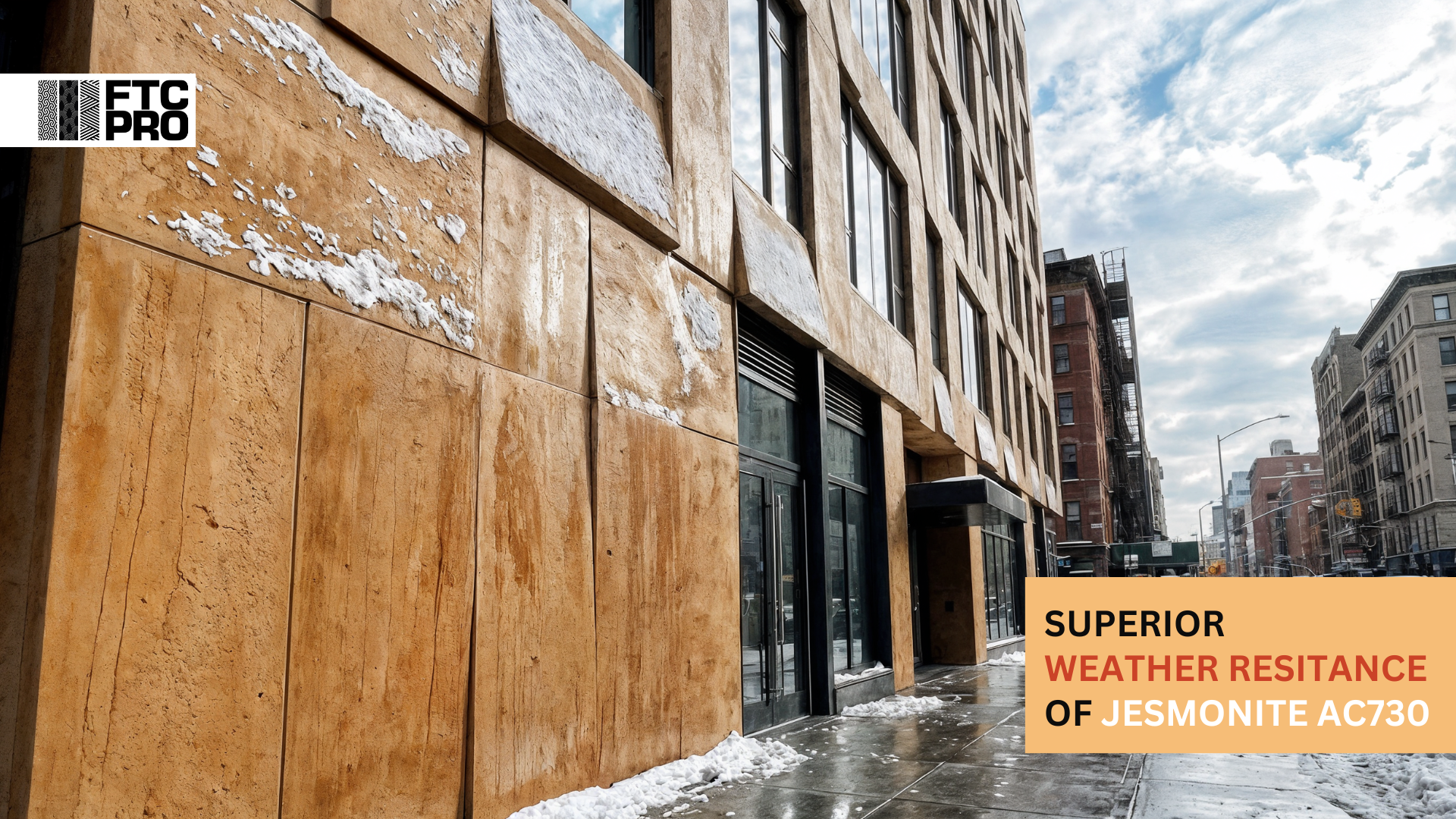
Freeze-thaw resistance. This is critical for architects specifying materials for Northern and Midwestern states. AC730 has been tested to 300 freeze-thaw cycles per DD CEN/TS 12390-9 — over five times the standard 56-cycle test maximum. This is one of AC730’s most impressive performance metrics and a major differentiator for projects in harsh winter climates. AC730’s low porosity and acrylic-modified matrix provide inherent resistance to freeze-thaw cracking without relying on air entrainment, the mechanism standard Portland cement systems depend on.
[Source: Jesmonite AC730 Technical Data Sheet — 300 cycles per DD CEN/TS 12390-9]
Water absorption. AC730 exhibits a water absorption rate of just 2.26%, tested to BS EN 1170-6. This is significantly lower than GRC, which typically absorbs 5–11% per the GRCA Specification, and dramatically lower than standard porous concrete. This low absorption means less moisture reaches the internal matrix, reducing the risk of staining, biological growth, and long-term deterioration. Minimal sealing is required compared to traditional concrete, which further reduces long-term maintenance costs for building owners.
[Source: Jesmonite AC730 TDS — 2.26% water uptake per BS EN 1170-6; GRCA Specification — GRC 5–11%]
Reduced efflorescence. One of the most common aesthetic defects in concrete facades is efflorescence — the white crystalline deposits that form when free lime migrates to the surface. AC730 has reduced free-lime content and lower alkalinity compared to ordinary Portland cement systems, which significantly minimises the risk of efflorescence. Finishes stay cleaner and more visually consistent over time.
Fire classification. AC730 achieves a fire classification of A2-s1-d0 under EN 13501-1, the European standard for reaction to fire performance. This is the highest achievable classification for a material containing any organic content and is equivalent to non-combustible performance. AC730 also achieves Class ‘O’ under BS 476 Parts 6 & 7.
For US projects, the A2-s1-d0 classification corresponds to the highest performance tier and makes AC730 suitable for use in egress routes, high-occupancy buildings, and projects in wildfire-prone regions.
AC730 is independently tested and certified to meet both major international fire safety standards for interior wall and ceiling finishes. Under EN 13501-1, AC730 is classified A2-s1-d0. For the US market, AC730 has been tested to ASTM E84-24 and achieved Class A classification with a Flame Spread Index (FSI) of 0 and a Smoke Developed Index (SDI) of 25 — comfortably within the Class A thresholds required under IBC Section 803.1. This dual certification means architects and specifiers can confidently specify AC730 for commercial interiors across both US and international jurisdictions without the need for additional compliance pathways or AHJ variances. For full ASTM E84 documentation, contact FTC Pro.
[Source: Jesmonite AC730 TDS — A2-s1-d0 per EN 13501-1; Class 'O' per BS 476 Parts 6 & 7; Class A per ASTM E84-24 (FSI 0, SDI 25)]
Mechanical strength. AC730 delivers compressive strength of 8,410 psi (58 MPa) (tested to BS EN 12390-3), which is comparable to high-strength concrete and significantly exceeds typical GRC performance. Flexural strength reaches a Modulus of Rupture (MOR) of 3,422 psi (23.6 MPa) and a Limit of Proportionality (LOP) of 1,291 psi (8.9 MPa) (tested to BS EN 1170-5). For context, GRC typically achieves an MOR of 8–18 MPa depending on grade — meaning AC730 exceeds even premium GRC formulations in flexural performance.
[Source: Jesmonite AC730 TDS — 8,410 psi (58 MPa) per BS EN 12390-3; MOR 3,422 psi (23.6 MPa) per BS EN 1170-5; GRCA Spec — GRC MOR 1,160–2,611 psi (8–18 MPa)]
UV stability. AC730 is UV stable as a standalone product, meaning the cementitious matrix and aggregate will not degrade or yellow under prolonged sun exposure. This makes it equally suitable for south-facing facades in Arizona as for sheltered courtyards in New England.
AC730 Technical Specifications
The following specifications are drawn directly from the official Jesmonite AC730 Technical Data Sheet. Architects and specifiers can download the full TDS or request a sample kit from FTC Pro to verify performance firsthand.
| Property | Value | Test Standard |
|---|---|---|
| Dry Density | 115 lb/ft³ (1,850 kg/m³) | Jesmonite AC730 TDS |
| Water Absorption | 2.26% | BS EN 1170-6 |
| Compressive Strength | 8,410 psi (58 MPa) | BS EN 12390-3 |
| Flexural Strength (MOR) | 3,422 psi (23.6 MPa) | BS EN 1170-5 |
| Flexural Strength (LOP) | 1,291 psi (8.9 MPa) | BS EN 1170-5 |
| Fire Classification | A2-s1-d0 | EN 13501-1 |
| Fire Classification (UK) | Class ‘O’ | BS 476 Parts 6 & 7 |
| Freeze-Thaw Resistance | 300 cycles | DD CEN/TS 12390-9 |
| Typical Panel Thickness | 0.4–0.5 in (10–12mm) | — |
| UV Stability | Stable (no yellowing) | — |
| Cure / Demold Time | 2–4 hours | — |
Comparison: AC730 vs. The Alternatives
When evaluating cladding materials for a facade specification, architects and engineers need clear, comparable data — not vague qualitative terms. The table below summarises how AC730 Micro-Concrete performs against the two most common traditional systems, using verified figures from the Jesmonite AC730 TDS and the GRCA Specification.
| Feature | AC730 Micro-Concrete | Traditional GRC | Pre-Cast Concrete |
|---|---|---|---|
| Dry Density | 115 lb/ft³ (1,850 kg/m³) | 112 lb/ft³ (1,800 kg/m³) | 150 lb/ft³ (2,400 kg/m³) |
| Typical Panel Thickness | 0.4–0.5 in (10–12mm) | 0.4–0.6 in (10–15mm) (spray GRC) | 2–6 in (50–150mm) |
| Approx. Facade Weight | ~4.5 lb/ft² at 0.5 in (~22 kg/m² at 12mm) | ~4.5–5.5 lb/ft² at 0.5–0.6 in (~22–27 kg/m² at 12–15mm) | ~49 lb/ft² at 4 in (~240 kg/m² at 100mm) |
| Compressive Strength | 8,410 psi (58 MPa) (BS EN 12390-3) | 5,800–8,700 psi (40–60 MPa) (varies) | 4,350–7,250 psi (30–50 MPa) typical |
| Flexural Strength (MOR) | 3,422 psi (23.6 MPa) (BS EN 1170-5) | 1,160–2,611 psi (8–18 MPa) (GRCA) | 435–725 psi (3–5 MPa) typical |
| Water Absorption | 2.26% (BS EN 1170-6) | 5–11% (GRCA Spec) | 5–8% typical |
| Efflorescence Risk | Low (reduced free-lime) | Moderate | High |
| Fire Classification | A2-s1-d0 (EN 13501-1) | Varies by formulation | Non-combustible (A1) |
| Freeze-Thaw | 300 cycles (DD CEN/TS 12390-9) | Moderate (varies) | Variable (air-entrained) |
| Detail Reproduction | Micron-level from mold | Good (spray application) | Low to medium |
| Set / Demold Time | 2–4 hours | 12–24 hours | 24–48 hours |
| Design Flexibility | 11 finishes + custom RAL | Limited finishes | Limited |
| Installation | Manual handling possible | Light mechanical lift | Crane required |
[Sources: Jesmonite AC730 Technical Data Sheet; GRCA Specification for GRC figures (facade weight reflects typical 12–15mm spray-applied range per GRCA); standard engineering references for pre-cast concrete.]
Why Architects are Switching to Micro-Concrete
Sustainability and reduced embodied carbon. Building facades can contribute 10–31% of a building’s total embodied carbon, according to research published in the CIBSE Journal, drawing on a 2021 study by the World Business Council for Sustainable Development (WBCSD). Research by the Facade Tectonics Institute cites 20–30% for the enclosure overall. Lighter panels directly reduce transport-related embodied carbon - AC730 at 0.5 in (12mm) delivers approximately 4.5 lb/ft² (22 kg/m²) compared to pre-cast concrete at 4 in (100mm) at 49 lb/ft² (240 kg/m²), a 91% weight reduction per square metre of facade. AC730 also cures without external energy input such as steam or heat, and it incorporates recycled materials into its composition.
[Sources: CIBSE Journal / WBCSD — facade embodied carbon 10–31%; Facade Tectonics Institute — enclosure 20–30%]
Research by Atelier Ten, published through the Facade Tectonics Institute, has found that cementitious composites like GFRC and UHPC offer the lowest embodied carbon among cladding options studied across large-scale commercial projects. For firms pursuing green building certification, LEED v5 now makes embodied carbon assessment a mandatory prerequisite - not just a credit - under Materials & Resources. AC730’s lightweight profile and low-energy curing process contribute directly to Reduced Embodied Carbon and Low-Emitting Materials credits.
[Source: Atelier Ten — “Cementitious composites like UHPC were found to be the option with lowest embodied carbon for both cladding and shading applications” (Facade Tectonics Institute research); USGBC LEED v5 Materials & Resources prerequisites]
A growing demand for lightweight facade systems. The global demand for lightweight, high-performance facade materials continues to grow as architects seek alternatives to traditional pre-cast concrete and natural stone systems. Cementitious composites — including GFRC, UHPC, and acrylic-modified systems like AC730 — are capturing an increasing share of the architectural cladding specification market, driven by tightening embodied carbon regulations, rising construction labour costs, and growing design expectations for complex facade geometries that traditional heavyweight systems cannot deliver economically.
While Europe currently leads adoption of advanced cementitious composites for architectural facades, North America and Asia-Pacific are the fastest-growing regions — reflecting the convergence of stricter energy codes, LEED v5 embodied carbon mandates, and a new generation of architects trained to evaluate materials on lifecycle performance rather than upfront cost alone.
Industry recognition. AC730’s potential has not gone unnoticed by the industry. It was awarded the 2025 Industry Choice Award for Innovation in Decorative Concrete at World of Concrete — the largest annual international event dedicated to the commercial concrete and masonry industries. This recognition has been independently reported by Concrete Decor Magazine and the Construction Owners Association, reflecting growing confidence among professionals that AC730 represents a genuine step forward.
Design freedom without compromise. Ultimately, what drives specification decisions is the ability to realise design intent without compromise. AC730 allows architects to specify the look and texture of natural stone, at a fraction of the weight, with superior durability metrics, faster installation timelines, and lower overall project costs. It is not a substitute for stone — it is an evolution beyond it.
Frequently Asked Questions
-
Yes. AC730 has been independently tested to ASTM E84-24 (A2LA accredited, Certificate No. 6524.03) and classified as Class A (Class 1) with a Flame Spread Index (FSI) of 0 and a Smoke Developed Index (SDI) of 25 (Report No. 25-002-042, tested February 2025). The material did not ignite during testing. AC730 also holds fire classifications of A2-s1-d0 under EN 13501-1 (European non-combustible classification) and Class 'O' under BS 476 Parts 6 & 7. Together, these classifications confirm non-combustible performance across US, European, and UK fire testing standards — providing architects and specifiers with verified compliance documentation for IBC Section 803.1 requirements. Contact FTC Pro to request a copy of the full ASTM E84 test report or to discuss fire code compliance for your specific project and jurisdiction.
-
AC730 and GRC have very similar densities (115 vs 112 lb/ft³ (1,850 vs 1,800 kg/m³)). The weight advantage of AC730 comes from the ability to cast thinner panels with adequate structural performance. The substantial weight saving — up to 91% — is primarily against conventional pre-cast concrete (150 lb/ft³ (2,400 kg/m³) at 2–6 in (50–150mm) thickness).
-
Yes. FTC Pro can provide samples of the material upon successful account setup. Contact FTC-Pro to apply.
-
AC730’s lightweight profile reduces transport-related embodied carbon, and its low-energy curing process contributes to Materials & Resources credits under LEED v5. Specifically, it can support Reduced Embodied Carbon and Low-Emitting Materials credits. Under LEED v5, an Environmental Product Declaration (EPD) is the primary documentation pathway for embodied carbon credits. FTC Pro recommends specifiers contact the team for the latest EPD status and available lifecycle data.
-
FTC Pro maintains stateside inventory at its 30,000+ sq ft warehouse. Contact the team directly for current stock availability, lead times, and project-specific quantity guidance.
About FTC Pro
FTC Pro is the official United States distribution hub for Jesmonite, the UK-based manufacturer of AC730 Micro-Concrete and the AC100 Eco-Resin system. Operating from a 30,000+ sq ft warehouse, FTC Pro provides US architects, fabricators, and specifiers with full access to the Jesmonite product range, custom color matching services, and stateside inventory for faster project delivery.
FTC Pro is an active participant in major US industry events, including World of Concrete and the NAHB International Builders' Show, and works directly with architectural practices, facade consultants, and fabrication workshops across North America.
Disclaimer: This article is published by FTC Pro as the official US distributor of Jesmonite. All technical claims are sourced from independently verified test data referenced in the Jesmonite AC730 Technical Data Sheet. Architects and specifiers are encouraged to verify specifications independently and request samples before finalising material selections.
Next Steps
If you are specifying facade materials for an upcoming project and want to evaluate AC730 Micro-Concrete firsthand:
Apply for an Account to see and feel how the material performs for your specific application, or discuss custom color matching for your design requirements.
Download the official AC730 Technical Data Sheet to verify all performance claims with independently tested data.
Use our material calculator to estimate quantities for your project, or contact us directly to speak with a named technical specialist.
The future of architectural wall cladding is lighter, faster, and more versatile than ever. AC730 Micro-Concrete is leading that evolution.